

Creative Space Keeps Disappearing
Can creative land trusts offer a path forward?


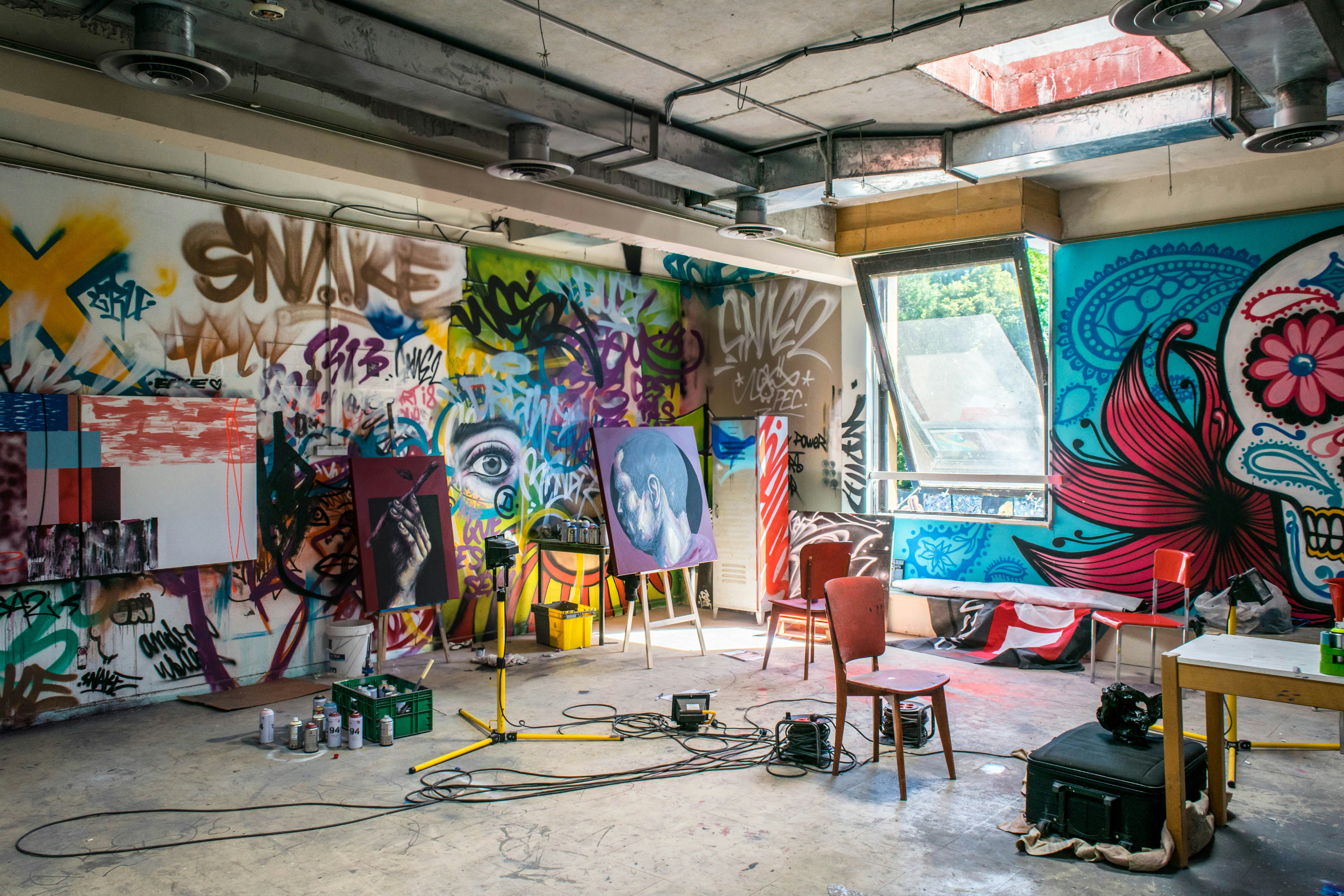
Artists are losing their workspaces faster than cities can protect them. In Massachusetts alone, Boston, Cambridge, and Somerville lost more than 100,000 square feet of studio, rehearsal, and cultural production space over the past decade. Vancouver’s East Side arts district lost 400,000 square feet of studio space over a decade to redevelopment, nearly half of all the art spaces the study tracked.
Thriving creative communities need affordable space to make and share creative work. Yet development and gentrification pressures are putting such spaces out of reach for most working artists. Too often, creatives operate on short-term leases that put them at severe risk of displacement.
In the face of market failure, community institutions and governments are advancing a new (old) model to protect and preserve creative space – a Creative Land Trust.
What’s a Creative Land Trust?
Though specific models vary, the basic purpose of a Creative Land Trust is to take private property off the speculative market and preserve it for creative and cultural use.
Creative land trusts evolved from the Community Land Trust model, which emerged during the Civil Rights era as a tool to support Black farmers in the South, and was later adapted as a tool to preserve affordable housing and combat gentrification in urban communities.
A Community Land Trust (CLT) is typically a nonprofit organization that purchases property and holds it permanently, taking it off the speculative market. CLTs are organized to advance the public good and are often democratically governed to enable community self-determination, particularly in the face of displacement.
Some CLTs steward properties in perpetuity for community benefit. For example, Mott Haven Port Morris Community Land Stewards is converting a 22,750 square foot building into a community-controlled HEARTS center in the South Bronx to provide a permanent home for local health, education, and arts nonprofits.
Other CLTs are organized to protect affordable housing. Under this model, homeowners own the structures built on the property, but lease the land itself from the Community Land Trust. When a homeowner sells, a resale formula caps how much appreciation they can keep, so the price stays within reach for the next buyer instead of rising to match the market.
Creative land trusts adapt the same core mechanics as community land trusts – permanent ownership, long-term leases, and affordable rents – to protect space for creative and cultural use.
Creative Land Trusts in the United States
Community Arts Stabilization Trust (CAST) launched in San Francisco in 2013 in direct response to the displacement crisis triggered by the Bay Area’s tech-driven real estate boom. As commercial rents spiked and long-standing arts nonprofits found themselves priced out, CAST adapted the community land trust model to the problem of disappearing nonprofit arts space.
Founded via a partnership between the Kenneth Rainin Foundation and Community Vision, CAST acquires buildings and helps arts and culture nonprofits obtain long-term space in them at below-market rates. In their lease-to-own model, CAST purchases the building, which the nonprofit pays off over a 7-10 year time horizon. As nonprofits repay their acquisition loans, that capital gets recycled into a revolving loan fund to buy more property. In other cases, CAST purchases and manages a building they make available to tenants via long-term, below-market leases.
While CAST operates as an independent nonprofit entity outside of government, public policy fuels its financing model, which relies on a combination of philanthropic funding and New Market Tax Credit financing. New Markets Tax Credits (NMTC) are a federal program that gives private investors a tax credit worth 39% of their investment, spread over seven years, in exchange for putting capital into certified community development projects in low-income census tracts. The credit is valuable enough that investors will accept below-market returns on the underlying deal, which effectively subsidizes financing costs for the project. According to CAST’s Joshua Simon, NMTC financing covers 15-20% of total project costs once the tax credit’s value is factored in.
On the other side of the country, Massachusetts’ Arts & Business Council of Greater Boston (A&BC) operates a Creative Land Trust that has secured over 500,000 square feet of affordable space across five buildings in Lowell, New Bedford, Worcester, and Somerville. Its flagship property in Lowell provides 250 studios and 50 units of live/work space, making it one of the largest nonprofit-owned artist communities in the country. Like CAST, A&BC owns and manages some properties where it offers below-market, long-term leases, and in other cases it transfers ownership and equity back to the cultural nonprofit once it’s ready to take over.
Public policy also supports A&BC’s model, albeit via state and federal Historic Tax Credit subsidies instead of New Market Tax Credits, and grant support from the state including its Cultural Facilities Fund, which is jointly administered by the state’s economic development arm (Mass Development) and state arts agency (Mass Cultural Council).
These models have inspired others internationally, including London’s Creative Land Trust in 2019. Through the World Cities Culture Forum’s efforts to promote the model, similar efforts are now underway in Austin, Sydney, Vancouver, Calgary, Melbourne, and Warsaw.
Public trusts as an alternative approach
Some Creative Land Trusts are owned or operated by governments themselves. For example, the city of Seattle chartered its Creative Space Agency as a Public Development Authority. The city owns and operates this Creative Land Trust, which worked with community-based partners to acquire properties like El Barrio, the 100-year old Columbia City Theater, and LaunchPoint, a permanently dedicated cultural space pop-up incubator. Creative Space Agency grew from a city-led effort to address threats to cultural space in the city, including the report, Structure for Stability, which explored potential models and recommended the Public Development Authority model.
The city of Helsinki also created its own Creative Land Trust, KAAPELI, which is a for-profit, private limited real-estate company that is wholly owned by the city. KAAPELI owns and manages roughly one million square feet of former industrial space that has been converted to cultural use. It is fully self-sustaining, receiving no public subsidy for its operations, though several of its buildings were donated to the organization by the city, including its first property, the Cable Factory.
The state of Massachusetts also attempted to establish the infrastructure for local communities to establish their own Creative Land Trusts. MASSCreative partnered with the Metropolitan Area Planning Council (MAPC) to develop and introduce The Creative Space Act, which would establish new “creative space” and “presentation space” land restrictions, making it easier to protect and develop new cultural spaces. It would also allow local municipalities to create their own Municipal Creative Space Trust Funds to acquire, purchase, maintain, and hold onto creative maker space assets.
The Massachusetts proposal builds on the state’s existing Affordable Housing Trust Fund infrastructure, but applies it to creative and cultural space. While it does not provide new funding for the model, it removes a major roadblock for local communities by establishing a common, state authorized vehicle to protect and preserve creative space, instead of requiring municipalities to apply for a special home rule petition if they want to create their own Creative Land Trust. Unfortunately, the Senate just opted not to include the Creative Space Act in its economic development bill, meaning advocates will need to keep fighting to make the proposal law.
Industry-specific Creative Land Trusts
The Music Venues Trust in the UK offers another promising model, rooted in a specific industry rather than location. The Music Venues Trust raises capital to purchase the buildings that house Grassroots Music Venues. Once they have acquired a building, they lease the space back to the venues via below-market, long-term leases that provide long-term stability to local music scenes.
Music Venue Trust is also unique in the source of its capital. It raises much of the money it uses to purchase buildings via Community Shares, a community ownership model that allows individuals to invest in the trust. To date, MVT has acquired ten properties, and they have more in the pipeline.
Of course, Creative Land Trusts aren’t the only model for preserving and protecting creative space. Many properties have benefited from the support of advocacy organizations like the Arts Stays Here Coalition in Boston, which helps artists at risk of displacement advocate to protect their space when threatened. IndieSpace in New York has done incredible work helping theaters at risk of displacement renegotiate their leases, find new space, and even purchase their building. Other groups, like ArtBuilt in Brooklyn, provide long-term, affordable studio space alongside the financial literacy and training creatives need to achieve long-term financial stability. And Artist Space Trust in the Bay Area is adapting the Community Land Trust model to affordable housing for artists.
How can local and state governments help?
Track creative space: The World Cities Forum published a Practical Guide for Creative Land Trusts, which recommends that communities start by mapping their existing spaces for creative production and presentation, so that they can track their growth or disappearance over time. The Metropolitan Area Planning Council did just that, and developed a prototype Creative Space Map that could be adapted for any municipality to track creative space in their community. The city of Sydney conducts a Floorspace Employment Survey every five years to understand how much real estate is dedicated to creative use.
Create plug-and-play legal structures: Right now, most municipalities that want to protect creative space via a Creative Land Trust have to build the legal vehicle from scratch. State policy like the Creative Space Act would replace case-by-case special legislation with a standing tool any municipality could use immediately to establish a Creative Land Trust in their community.
Capital and financing: Every Creative Land Trust stacks multiple forms of capital. Federal New Markets Tax Credits helped finance CAST’s founding pilot projects and have covered as much as 90% of costs on some of its later deals. Massachusetts’ Cultural Facilities Fund, jointly run by MassDevelopment and the Mass Cultural Council, provided a $200,000 capital grant toward Creative Hub Worcester, while state and federal Historic Tax Credits covered other costs on that same project. In 2018, New York City set aside capital to support its Affordable Real Estate for Artists (AREA) initiative to seed new affordable artist housing and workspaces in city-owned buildings, though progress has been slow.
Donate space: Sometimes the most valuable thing a government can contribute is the property it already owns. For example, Helsinki transferred ownership of the old Nokia cable factory to KAAPELI. Seattle’s Cultural Space Agency negotiated a 60-year, no-rent lease for space inside King Street Station, a city-owned historic train station, which now houses a youth-focused cultural hub. And in San Francisco, CAST partnered directly with the city’s Parks & Recreation department to bring the Geneva Car Barn & Powerhouse, a former municipal transit building, into cultural use.
Fund technical assistance: Successful Creative Land Trusts are upfront about the challenges of making the stars align to find the right property, tenants, financing, and property management to make the model work. Both CAST and Arts & Business Council of Greater Boston run Technical Assistance Programs to support this work. Municipalities that wish to support the development of local Creative Land Trusts should invest in the expertise they need to make these projects work.
Though the specific models and implementation differ, ultimately the purpose of a Creative Land Trust is simple – to remove property from the speculative market and dedicate it to long term, affordable, creative use.
That’s a public good that all governments, big and small, should get behind.
What We’re Reading and Watching
Tenants in Madrid are using art and community care to fight for their rights.
Some colleges are preparing artists to use AI in their creative careers. Meanwhile, these studies reveal the costs of AI-assisted creativity.
Learn more about freelancer benefits via this Q&A with Ann Boger, former COO of Freelancers Union and co-author of CRNY’s Snapshot of Portable Benefits for Artists and Creative Workers
Publishers and authors just filed a new class action lawsuit against Google for copyright infringement in developing and training AI models, while Anthropic has to pay a copyright settlement for taking pirated copies of books to train Claude.
New survey finds 3 in 4 voters say the cost of childcare is a major problem, fueling the affordability crisis
Everything you ever wanted to know about sectoral bargaining
Advocacy and Policy Happenings
Join the Protect Working Musicians act (PWMA) Coalition Webinar on August 6 to learn about the legislation that would allow independent creators to negotiate collectively with AI developers and streaming platforms for fair compensation and licensing terms.
The public has 60 days (until September 4th) to submit comments on the DOJ settlement with Live Nation (which largely left their market power intact). More details from NIVA here.
A bipartisan paid family leave bill is moving through the House. It wouldn’t provide comprehensive nationwide coverage, but would offer incentives for states to build out their own plans.
The Senate Commerce Committee pushed its markup of AI and child online safety bills to next week as lawmakers struggle to find compromise on a slew of issues and OpenAI’s Sam Altman visits Washington to make his case in person.
Senate Democrats introduced a bill that would allow all American children to enroll in Medicaid (dubbed Medikids).
Thank you for writing and providing the CLT information on this article. I wish financial backing were available to artist like myself with no non-profit ( I wouldn't even know how to start one) who own a multi use historic property, and would love to donate the space for creatives to utilize, but don't have the financial resources to rehab and restore to a usable space for other artist.